Threat from Above: Asteroid Impacts

Every day, our planet travels through space, passing through millions of cosmic fragments left behind by the formation of the solar system. While most of these particles burn up harmlessly as meteors in the upper atmosphere, larger space rocks pose a rare but continuous threat. Understanding the likelihood of an asteroid strike requires analyzing both historical records and modern astronomical monitoring.

The mathematical likelihood of a catastrophic impact depends entirely on the size of the asteroid. Small objects a few meters across enter Earth’s atmosphere constantly, disintegrating before reaching the ground. Medium-sized objects, roughly 100 meters wide, strike Earth approximately once every 10,000 years, capable of destroying a city. Giant asteroids larger than one kilometer hit Earth only once every few million years, making a major collision extraordinarily unlikely in any given human lifespan.
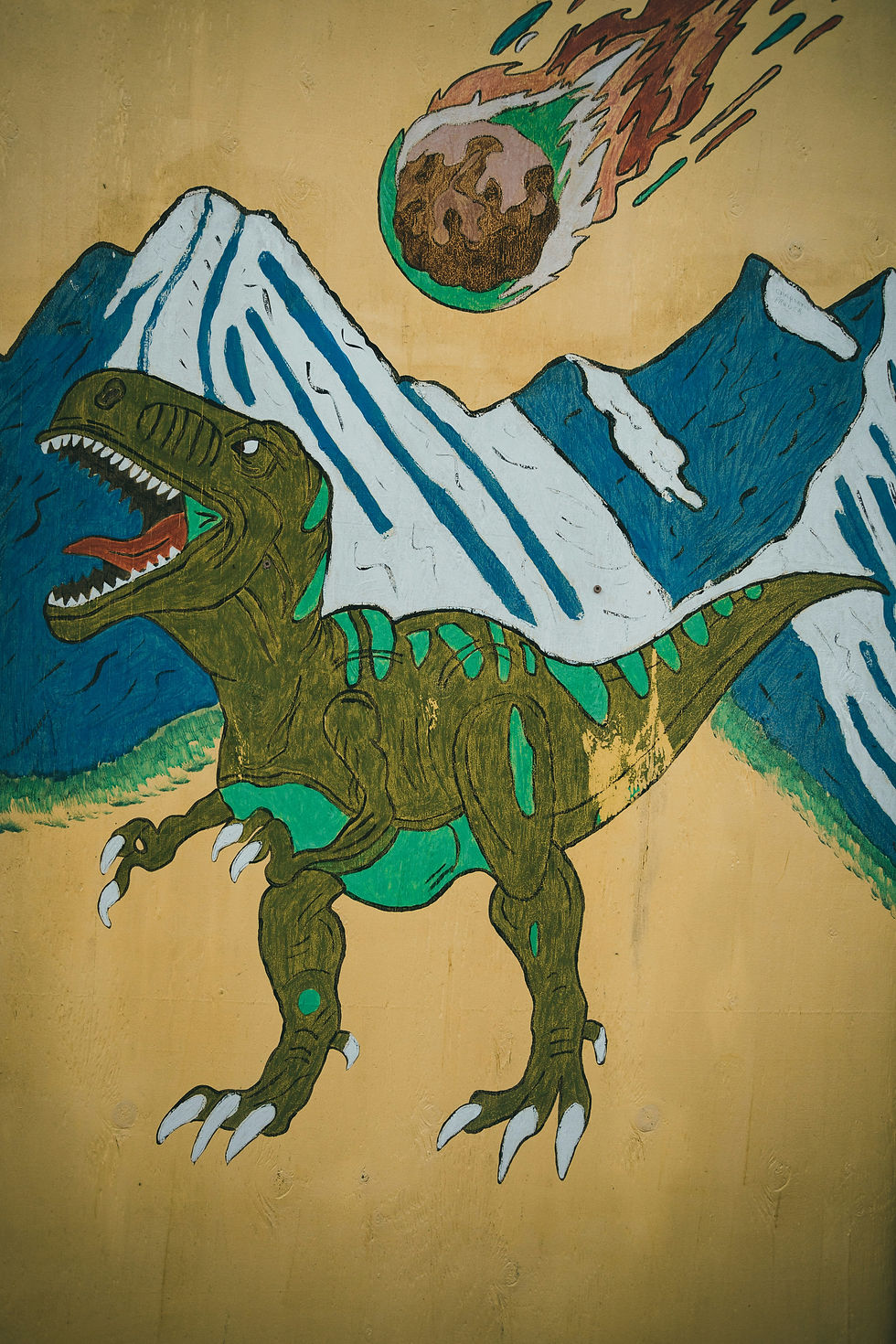
Earth bears dramatic geological scars from ancient space encounters that shaped the history of life. The most famous incident occurred approximately 66 million years ago when a massive asteroid, about 10 kilometers wide, crashed into the modern-day Yucatán Peninsula in Mexico. Known as the Chicxulub impact, this catastrophic collision triggered a mass extinction event that wiped out three-quarters of all plant and animal species on Earth, famously ending the reign of the non-avian dinosaurs.

More recently, smaller yet significant impacts have occurred in modern history without causing global extinction. In 1908, a space rock exploded over a remote forest region in Chelyabinsk and Tunguska, Siberia, flattening over 800 square miles of forest. In 2013, another meteor exploded over Chelyabinsk, Russia, producing a shockwave that shattered windows across several cities and injured over 1,000 people. These recent events demonstrate that localized impact risks remain relevant today.
If a massive asteroid were to strike Earth today, the immediate and long-term consequences would be devastating. Upon impact, the kinetic energy released would instantly vaporize everything near the crash zone and generate enormous shockwaves. If the object hit an ocean, mega-tsunamis hundreds of meters high would sweep across coastal cities worldwide within hours.
Beyond the initial destruction, global climate disruption would pose the greatest long-term threat to survival. The collision would hurl millions of tons of dust, ash, and soot high into the stratosphere, blocking sunlight across the entire planet. This "impact winter" would cause global temperatures to plunge drastically, crippling agriculture, collapsing ecosystems, and triggering widespread food shortages for years.
Fortunately, modern science is actively developing technology to prevent such a scenario from ever happening. Space agencies like NASA continuously track thousands of Near-Earth Objects (NEOs) using ground telescopes and space observatories. By identifying potential threats decades in advance, scientists gain the valuable time required to plan effective planetary defense missions.
The primary method for stopping a dangerous asteroid is kinetic deflection, altering its path rather than destroying it. In 2022, NASA successfully demonstrated this concept with its DART (Double Asteroid Redirection Test) mission by purposefully crashing a spacecraft into the moonlet Dimorphos. The collision successfully altered the asteroid's orbital path, proving that humanity can deflect a dangerous object given sufficient warning time.
For larger targets discovered on short notice, alternative planetary defense concepts are currently under investigation. Scientists have proposed using heavy spacecraft acting as "gravity tractors" to gently pull an asteroid off course over several years using gravitational force. In extreme emergencies, detonating a nuclear explosive near the object could vaporize its surface and push it into a safe orbit.
Ultimately, asteroid impacts represent a unique class of natural disaster because they are entirely preventable. Unlike earthquakes or volcanic eruptions, cosmic collisions can be predicted with extreme mathematical precision and stopped using existing technology. As monitoring networks expand, humanity remains safer from outer space threats than ever before in earth's history.
Reading Comprehension Questions
How frequently do medium-sized asteroids (around 100 meters wide) strike the Earth?
What major environmental effect caused the extinction of the dinosaurs after the Chicxulub impact?
What occurred during the 2013 Chelyabinsk event in Russia?
How did NASA’s DART mission demonstrate that we can alter an asteroid’s path?
Why are asteroid impacts considered unique compared to other natural disasters like earthquakes?
Vocabulary List
Disintegrate (verb): To break down into tiny pieces until nothing remains.
Catastrophic (adjective): Involving or causing sudden, great damage or suffering.
Extinction (noun): The state or process of a species, family, or larger group being completely wiped out.
Kinetic (adjective): Relating to or resulting from motion.
Vaporize (verb): To convert or be converted into vapor, gas, or steam instantly.
Stratosphere (noun): The layer of the earth's atmosphere above the troposphere, extending to about 32 miles (50 km) above the earth's surface.
Deflection (noun): The action of changing the direction or course of an object.
Orbit (noun): The curved path of a celestial object or spacecraft around a star, planet, or moon.
Precision (noun): The quality, condition, or fact of being exact and accurate.
Propose (verb): To put forward a plan or suggestion for consideration.
Phrasal Verb Focus: Wipe Out
Meaning: To completely destroy, eliminate, or eradicate something.
Examples:
The Chicxulub asteroid impact wiped out the non-avian dinosaurs millions of years ago.
Severe flooding wiped out all the crops in the valley last season.
American Idiom Focus: Dodged a Bullet
Meaning: To narrowly escape a dangerous, difficult, or disastrous situation.
Example:
When the asteroid passed Earth without coming into contact with our atmosphere, scientists felt we really dodged a bullet.
English Grammar Tip: Third Conditional
The Third Conditional is used to talk about hypothetical past situations—things that did not happen in the past and their imaginary results.
$$\text{If} + \text{past perfect}, \text{would have} + \text{past participle}$$
Example 1: If the Chicxulub asteroid had missed Earth, dinosaurs would have continued to evolve.
Example 2: If NASA had not tracked the asteroid early, scientists would not have been able to prepare a deflection mission.
Listening
Homework Assignment
Task: Write a formal opinion essay (150–200 words) addressing the following prompt:"Do you believe world governments should spend billions of dollars on planetary defense against asteroids, or should those resources be spent on immediate problems like climate change and poverty? Support your argument with evidence from the text."



Comments