The Power of Bulk Retail: Inside Sam's Club and Member's Mark
- Marcelo Serafim
- 6 hours ago
- 5 min read

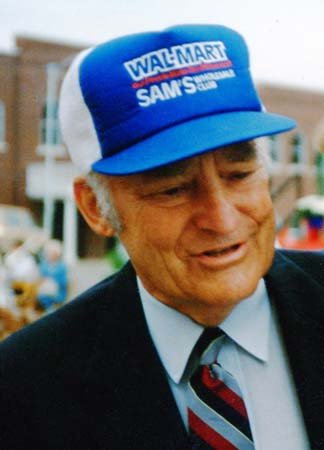
Sam’s Club is one of the most recognizable retail warehouse chains in the world, operating as a division of Walmart Inc. Founded in 1983 by retail pioneer Sam Walton in Midwest City, Oklahoma, the company was designed to serve small business owners who needed to purchase goods in bulk at wholesale prices. Over the decades, however, the business model expanded to accommodate individual consumers looking to stretch their household budgets. By focusing on high-volume sales and minimal operating expenses, Sam’s Club created a successful formula that transformed everyday shopping.

At the core of the Sam's Club business structure is a paid membership model. Customers must pay an annual fee to access the warehouse locations and online storefront. This subscription strategy generates predictable recurring revenue for the corporation, allowing Sam’s Club to sell products at much lower profit margins than traditional supermarkets. Members receive value not only through discounted prices on bulk goods, but also through specialized services such as tire installation, optical centers, prescription pharmacies, and discounted fuel stations.
To strengthen customer loyalty and increase profitability, Sam’s Club introduced its proprietary brand, Member's Mark, in the 1990s. Initially, the retailer carried multiple store brands across different merchandise categories, which created a fragmented corporate identity. In 2017, the company made a strategic decision to consolidate all internal private labels under the single Member's Mark banner. This streamlining made it much easier for shoppers to identify exclusive items that matched or exceeded the quality of national brands.
The strategic partnership between Sam’s Club and Member's Mark represents a classic example of a private-label retail model. Member's Mark items are manufactured specifically for Sam's Club by contract manufacturers, often including top-tier companies that produce famous brand-name goods. Because Sam’s Club eliminates traditional marketing expenses, intermediary distributor fees, and expensive retail packaging for these items, it passes the resulting financial savings directly onto the consumer.
Quality control plays a central role in maintaining consumer confidence in the Member’s Mark lineup. To ensure high standards, Sam’s Club regularly audits its supply chain partners and redesigns product formulas based on direct member feedback. The store brand covers an extensive assortment of products, ranging from fresh meats and organic grocery staples to outdoor furniture, paper goods, and vitamins. By offering premium-grade items at competitive prices, the store brand reinforces the perceived value of keeping an active club membership.

From an economic perspective, Member's Mark serves as a vital margin driver for the parent organization. While national brand manufacturers often control wholesale prices, private labels allow retailers to secure higher profit margins even while pricing goods lower than brand-name competitors. Furthermore, having a strong proprietary brand protects Sam’s Club from supply chain disruptions, as the company maintains greater oversight and flexibility regarding sourcing, logistics, and pricing strategies.
In recent years, Sam’s Club has integrated advanced technology into the member experience to modernize warehouse shopping. Features such as the "Scan & Go" mobile application permit shoppers to scan item barcodes on their smartphones and pay digitally, entirely bypassing traditional checkout lanes. The Member's Mark brand has adapted seamlessly to this digital transition, frequently featuring prominently on digital platforms through curated home delivery and curbside pickup options.
Sustainability and ethical sourcing have also become core pillars of the relationship between Sam’s Club and its house brand. The company has publicly committed to responsible sourcing guidelines for Member's Mark products, aiming to reduce plastic packaging, source sustainable coffee and seafood, and lower carbon emissions across its distribution network. This deliberate focus appeals directly to modern, environmentally conscious consumers who expect large corporations to prioritize environmental stewardship.
Competition in the warehouse club sector remains intense, with major rival Costco and its renowned Kirkland Signature brand presenting constant market pressure. To maintain its market share, Sam’s Club continuously innovates its Member's Mark line by introducing trending dietary products, artisanal foods, and eco-friendly home items. This continuous adaptation ensures that the brand remains relevant in a rapidly evolving retail landscape where customer expectations change frequently.
Ultimately, the dynamic synergy between Sam’s Club and Member’s Mark demonstrates how a warehouse retailer can build a sustainable competitive advantage. By pairing a fee-based membership network with a trustworthy private-label brand, Sam's Club delivers consistent financial value to its members while driving long-term profitability. As consumer shopping habits continue to evolve, the combined strength of these two entities positions Sam's Club as an enduring force in global bulk retail.
Reading Comprehension Questions
Why was Sam's Club originally created in 1983, and how did its target customer base change over time?
How does the paid membership model benefit Sam's Club's financial strategy?
What major strategic decision regarding store brands did Sam's Club make in 2017?
How is Sam's Club able to sell Member's Mark products at lower prices than national brands?
What technological feature allows Sam's Club members to avoid waiting in traditional checkout lines?
Key Vocabulary
Wholesale (noun/adjective): The business of selling goods in large quantities at low prices, typically to retailers or businesses rather than individual end-consumers.
Consolidate (verb): To combine multiple items, businesses, or brands into a single, more effective unit.
Proprietary (adjective): Relating to an owner or ownership; held under exclusive legal rights or branding.
Fragmented (adjective): Broken into separate, incomplete, or disorganized parts.
Intermediary (noun/adjective): A person or organization that acts as a link or agent between two parties in a business transaction.
Assortment (noun): A collection of various items or goods categorized together.
Profit Margin (noun): The amount by which revenue from sales exceeds costs in a business, expressed as a percentage.
Oversight (noun): The responsibility of overseeing, managing, or supervising a process, execution, or organization.
Stewardship (noun): The responsible management and careful ethical handling of something entrusted to one's care, such as natural resources.
Synergy (noun): The combined power or interaction of two organizations or elements that produces a greater result than the sum of their individual efforts.
Phrasal Verb Section
Phrasal Verb: Pass on (to)
Meaning: To transfer a benefit, cost, obligation, or piece of information from oneself to another person or group.
Example 1: By purchasing items in bulk, Sam's Club reduces its expenses and passes on the savings to its members.
Example 2: When wholesale prices rise sharply, manufacturers often pass on the additional costs to consumers.
American Idiom Section
Idiom: Stretch a dollar
Meaning: To spend money carefully and wisely in order to maximize its purchasing power and get the most value out of a budget.
Example: Many families join warehouse shopping clubs because bulk prices help them stretch a dollar during times of high inflation.
English Grammar Tip: Active vs. Passive Voice in Corporate Writing
In business writing, choosing between the active voice and the passive voice changes the tone and clarity of your sentence.
Active Voice: The subject performs the action. It makes writing direct, dynamic, and clear about who is taking action.
Example: "Sam's Club launched Member's Mark in the 1990s."
Passive Voice: The subject receives the action (formed with to be + past participle). It is used when the actor is unknown, obvious, or less important than the action itself.
Example: "Member's Mark products are manufactured by third-party suppliers."
Tip: Use the active voice when describing company achievements or strategies. Use the passive voice when focusing on processes, products, or general results where the specific agent is less critical.
Listening
Homework Assignment
Task: Write a short analytical essay (250–300 words) or prepare a 3-minute oral presentation comparing a private-label store brand (like Member's Mark, Kirkland Signature, or a local supermarket brand) with a major national brand you regularly buy.
Instructions:
Identify the two brands and the specific product category (e.g., coffee, paper towels, dairy).
Compare them based on three criteria: price, packaging, and perceived quality.
Conclude with your opinion: Is purchasing the store brand worth the price difference, or do you prefer paying extra for the national brand? Include at least two vocabulary words and one phrasal verb from this lesson.
To explore an investigation into how Member's Mark products are produced and compare with national brands, watch Who REALLY Makes Member's Mark at Sam's Club. This video provides an engaging visual breakdown of the private-label manufacturing partnerships behind Sam's Club's store brand.


Comments